


FLOWN SPACECRAFT ARTIFACT · STS-109
Space Shuttle Columbia
Space Shuttle Columbia
Own a real payload bay liner specimen flown aboard Columbia on STS-109. A very limited piece of spaceflight history, presented in an 8 × 10-inch acrylic display.
YOUR SPACEFLIGHT EXHIBIT
- Space-flown specimen
- 8x10" Acrylic display
- Removable specimen jar
- Certificate of Authenticity
Couldn't load pickup availability
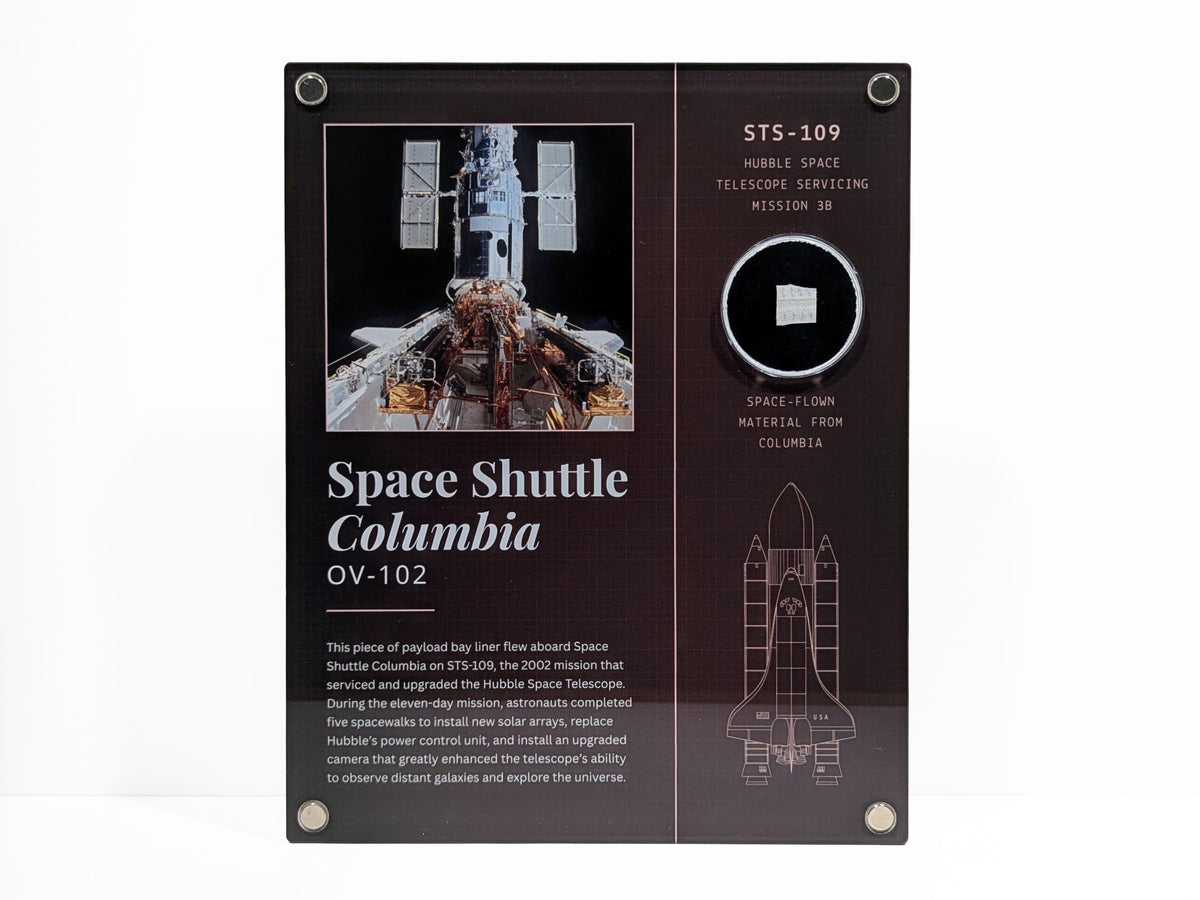
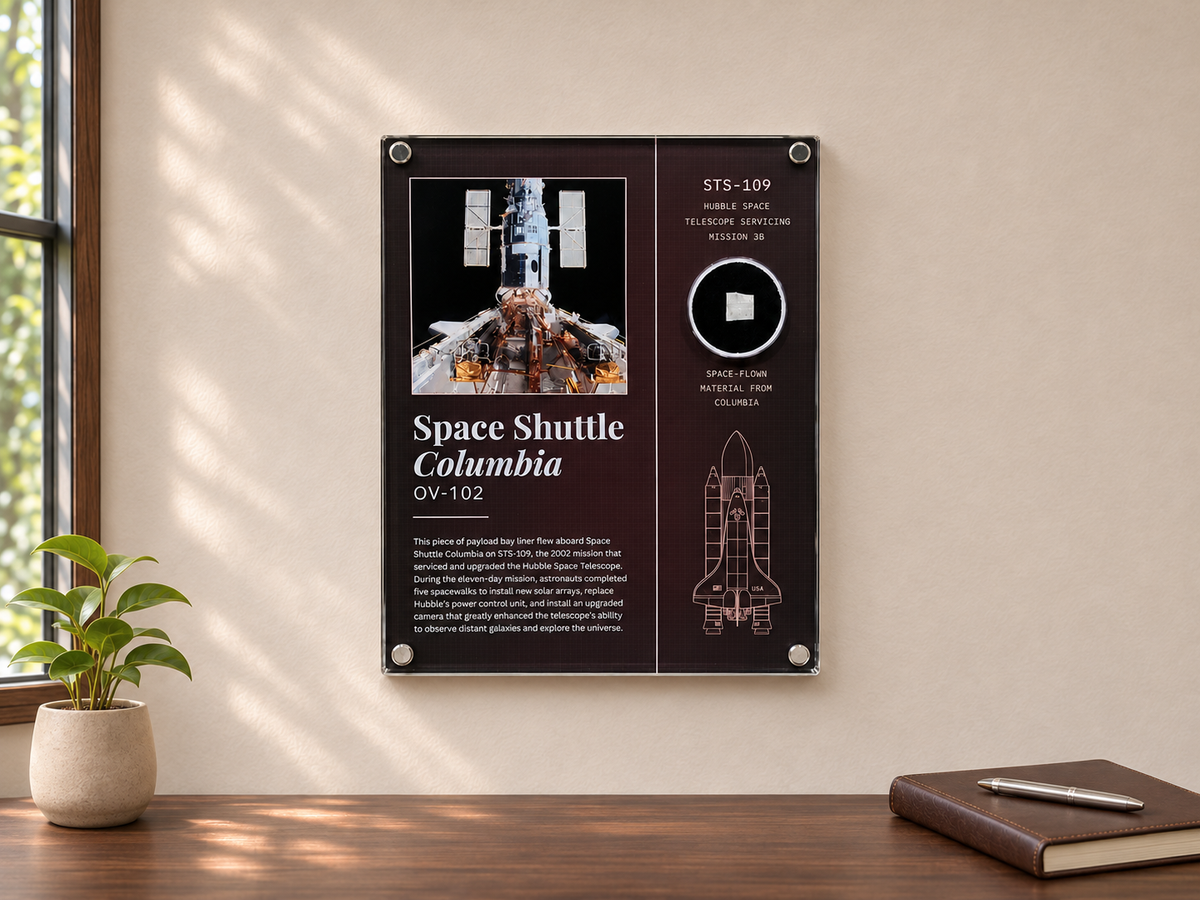
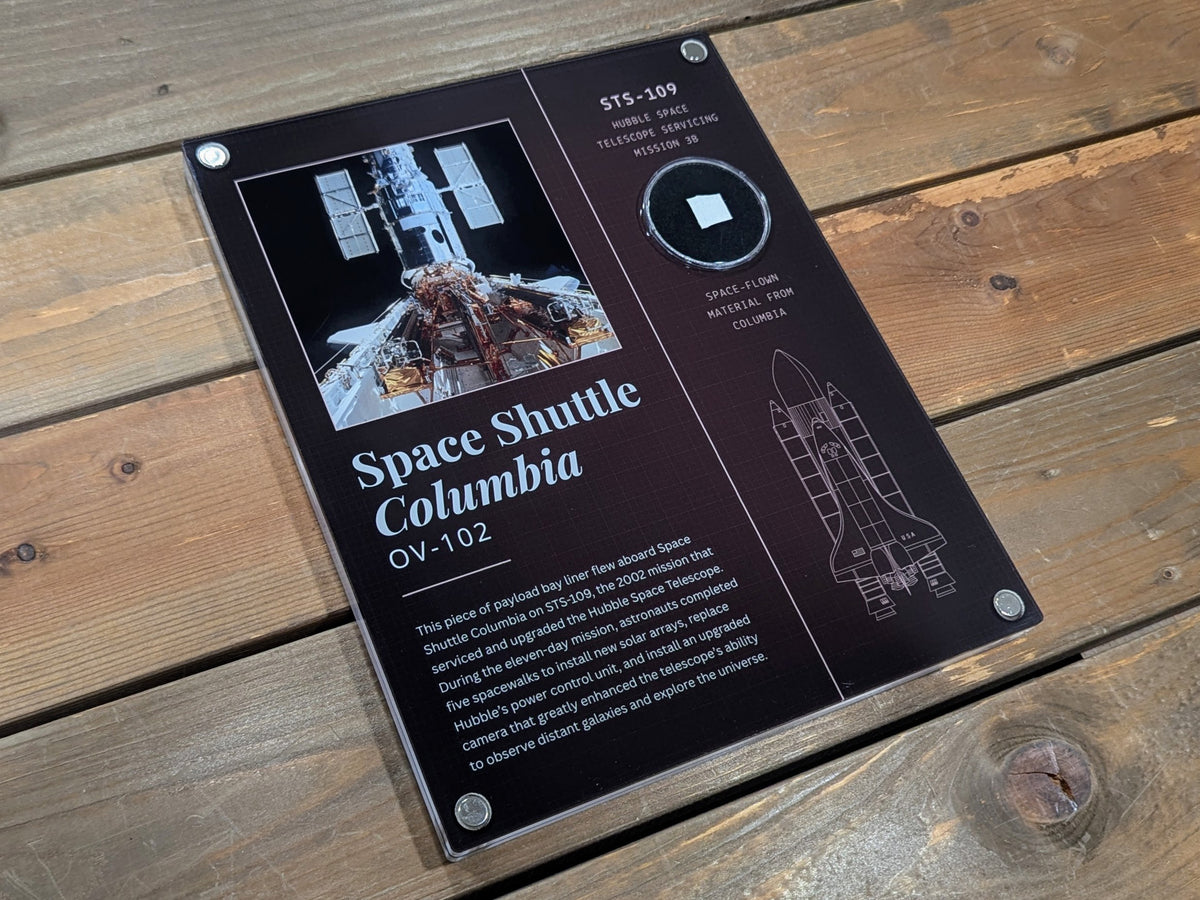
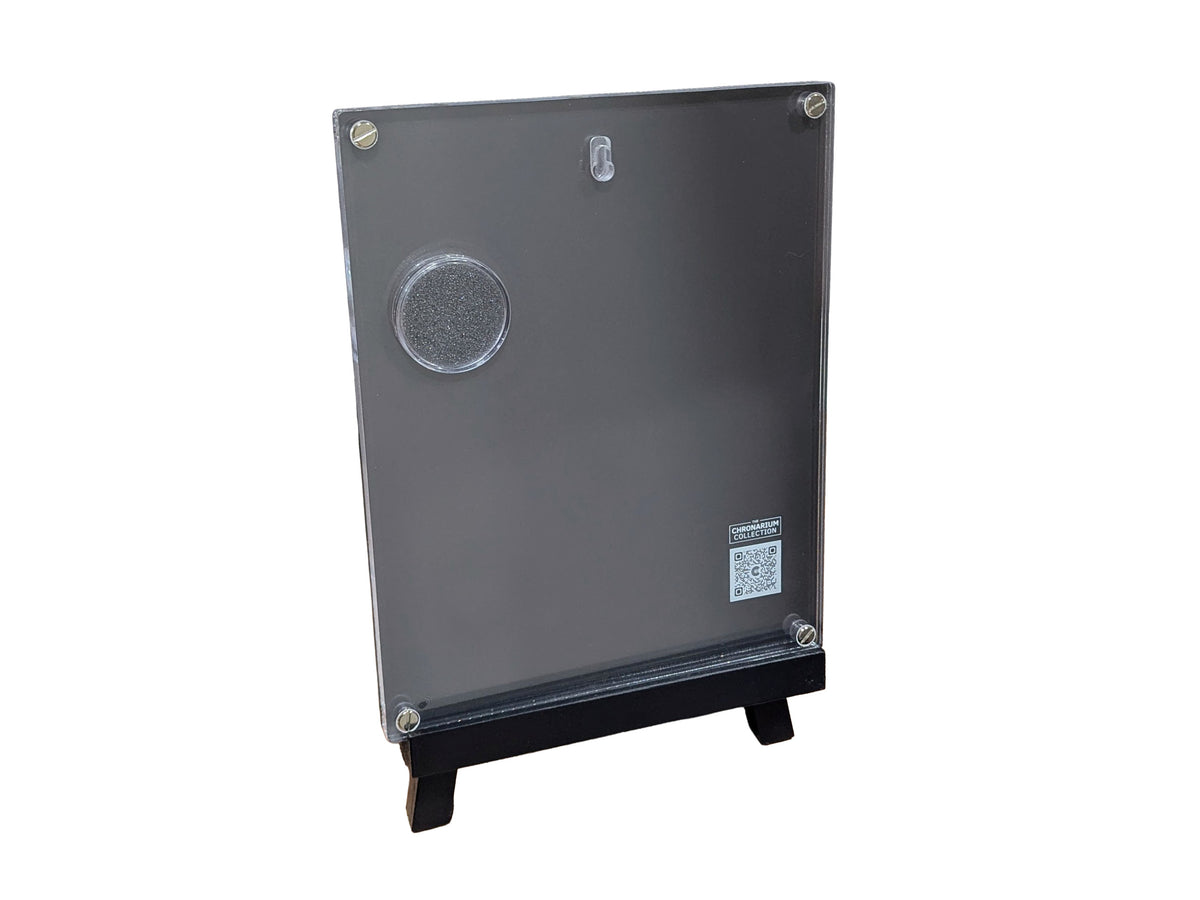
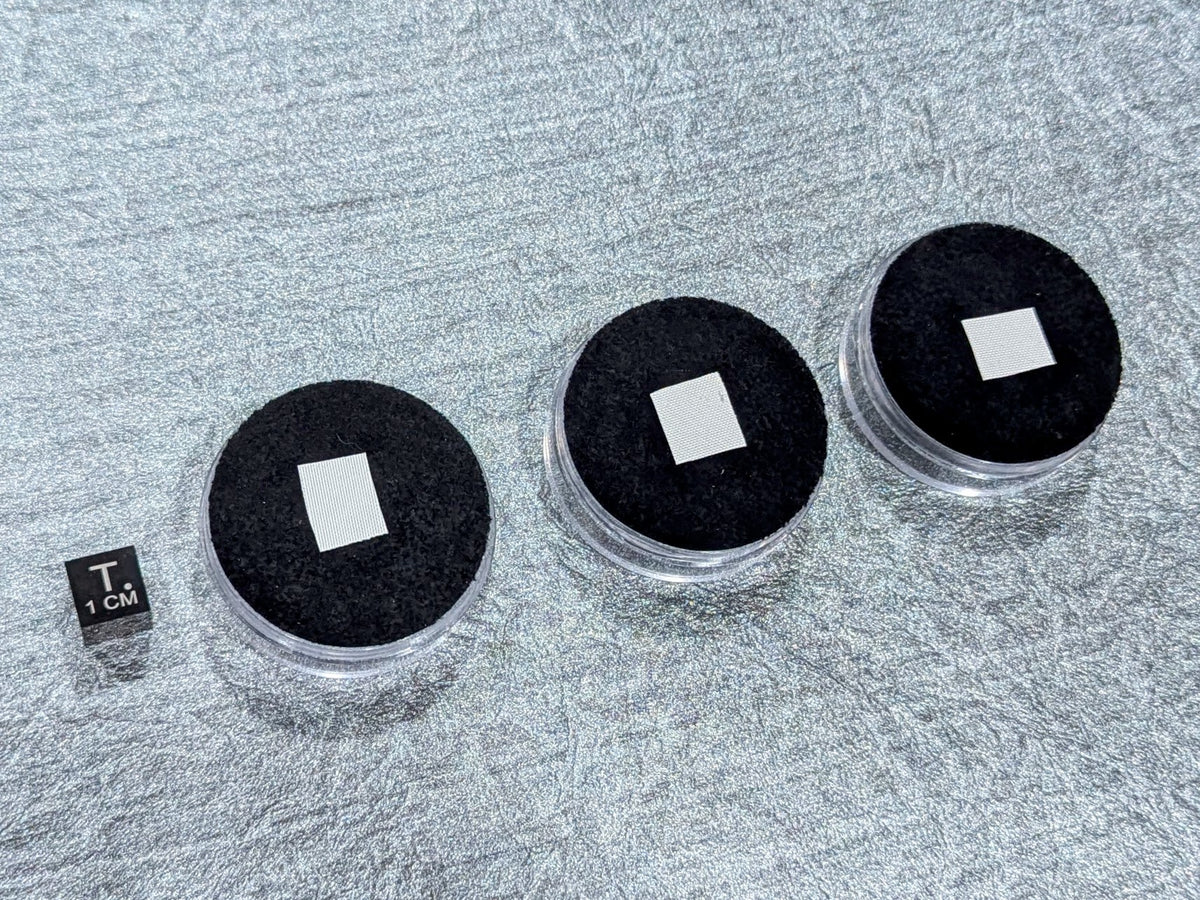

Original product photograph. Specimen will vary, see examples below.
THE FLOWN ARTIFACT
Material that traveled with a mission to transform Hubble.
Columbia’s payload bay became a service station for the Hubble Space Telescope during STS-109. This acrylic display preserves a real piece of the bay liner that flew aboard Columbia on that mission.
Made from heat-resistant Beta cloth, the liner covered insulation within the payload bay and helped maintain a clean environment around its cargo. This modest material belonged to the spacecraft that made five complex spacewalks and a major observatory upgrade possible.

Hubble held by Columbia’s robotic arm on flight day three of STS-109, before being secured in the payload bay for servicing. Image: NASA.
COLUMBIA · STS-109 · MARCH 2002
An observatory renewed in orbit.
Columbia launched on 1 March 2002 for Hubble Servicing Mission 3B. Seven astronauts set out to extend the telescope’s capabilities through a demanding sequence of repairs and upgrades, performed with Hubble secured in the shuttle’s payload bay.
Across five spacewalks totaling 35 hours and 55 minutes, the crew installed new solar arrays, replaced Hubble’s power control unit and added the Advanced Camera for Surveys. A new cooling system brought the Near Infrared Camera and Multi-Object Spectrometer back into operation.
These improvements gave Hubble more power and new ways to study the universe. The crew released the telescope on 9 March, and Columbia returned to Earth on 12 March after nearly eleven days in space.
Your specimen is a piece of payload bay liner flown aboard Columbia on this mission. Preserved in its own removable jar, it connects a personal collection to the practical work of maintaining a great observatory hundreds of miles above Earth.
Launch: 1 March 2002
Landing: 12 March 2002
Crew: 7 · Spacewalks: 5
Mission: Hubble Servicing Mission 3B

Three example specimens are shown for comparison.
A CLOSER LOOK AT YOUR SPECIMEN
One small specimen. A remarkable journey.
The photograph shows examples of the payload bay liner pieces available for this display. Each is roughly 1cm in size. You will receive one specimen, selected from our limited supply. It may be one of the examples pictured or another piece.
The removable jar lets you examine your specimen more closely while keeping it contained. The acrylic display and accompanying certificate identify its spacecraft and mission.

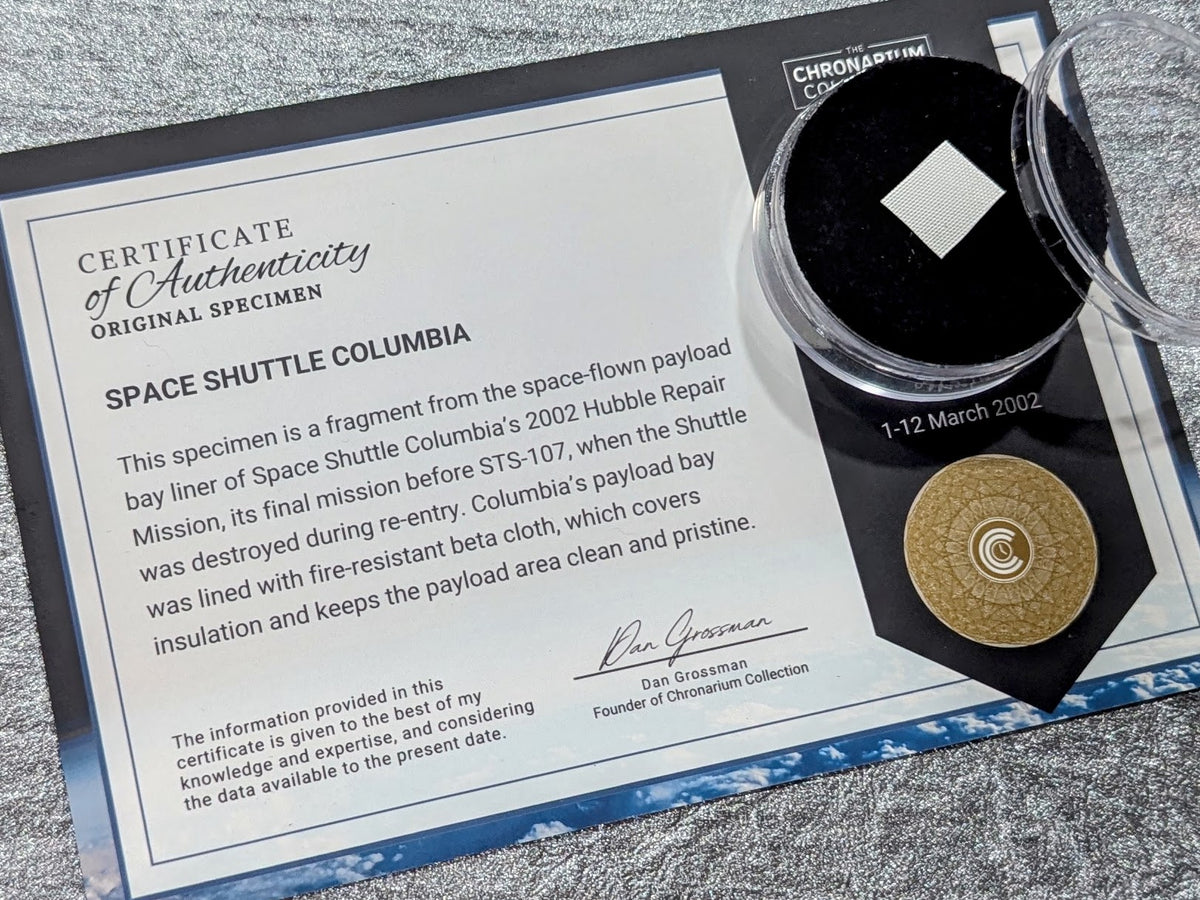
The Chronarium Collection Certificate of Authenticity supplied with the Columbia display. Select the image to read it in detail.
AUTHENTICITY & PROVENANCE
History you can examine.
Every display includes a Certificate of Authenticity issued by Chronarium Collection, identifying the specimen as a payload bay liner specimen flown aboard Columbia on STS-109.
The source artifact was acquired through a specialist space memorabilia auction whose authenticity commitment is supported by provenance, research and documented history. We retain that acquisition context as part of the artifact’s story.
Understanding the documentation
The Chronarium Collection certificate identifies the specimen supplied with your display. Historical records and acquisition information support the attribution of the source artifact. NASA photographs and mission accounts provide historical context; they are not an endorsement or certification of this commercial product.
Photographs of supporting records are provided for reference. Original historical paperwork is not included with the display.
A closer look at the supporting record
This maintenance record accompanies the source artifact’s history. Handwritten annotations identify OV-102, March 2002 and STS-109; the printed work-package fields refer to subsequent processing.


The display measures 8 × 10 inches and can be displayed on a table or hung on a wall
A PLACE IN YOUR COLLECTION
Spaceflight history, beautifully presented.
Give the artifact room to tell its story. The acrylic display pairs mission artwork and information with a removable specimen jar, creating a compact exhibit for a home office, study or collection. At approximately 15 mm thick, the display can be shown on a table or shelf, or wall-mounted from the keyhole on the back.
It makes a thoughtful addition to a collection built around the shuttle program, human spaceflight or the engineering that made those missions possible.
Displaying and caring for your specimen
Keep the specimen inside its jar while examining it. Handle the acrylic with care and use a clean, soft cloth to remove surface dust. Avoid abrasive cleaners and unnecessary handling of the artifact itself.