


FLOWN SPACECRAFT ARTIFACT · STS-103
Space Shuttle Discovery
Space Shuttle Discovery
Own a real payload bay liner specimen flown aboard Discovery on STS-103. A very limited piece of spaceflight history, presented in an 8 × 10-inch acrylic display.
YOUR SPACEFLIGHT EXHIBIT
- Space-flown specimen
- 8x10" acrylic display
- Removabls specimen jar
- Certificate of Authenticity
Couldn't load pickup availability
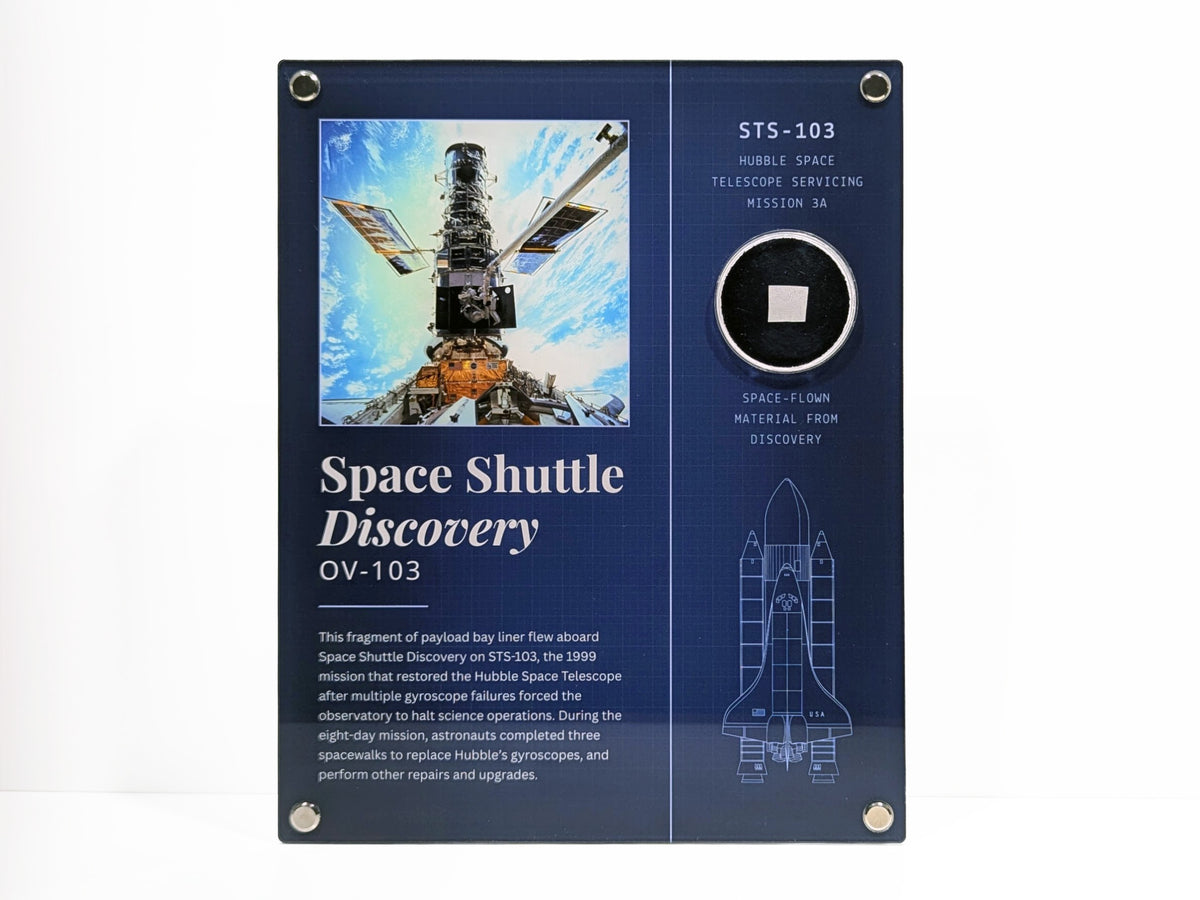
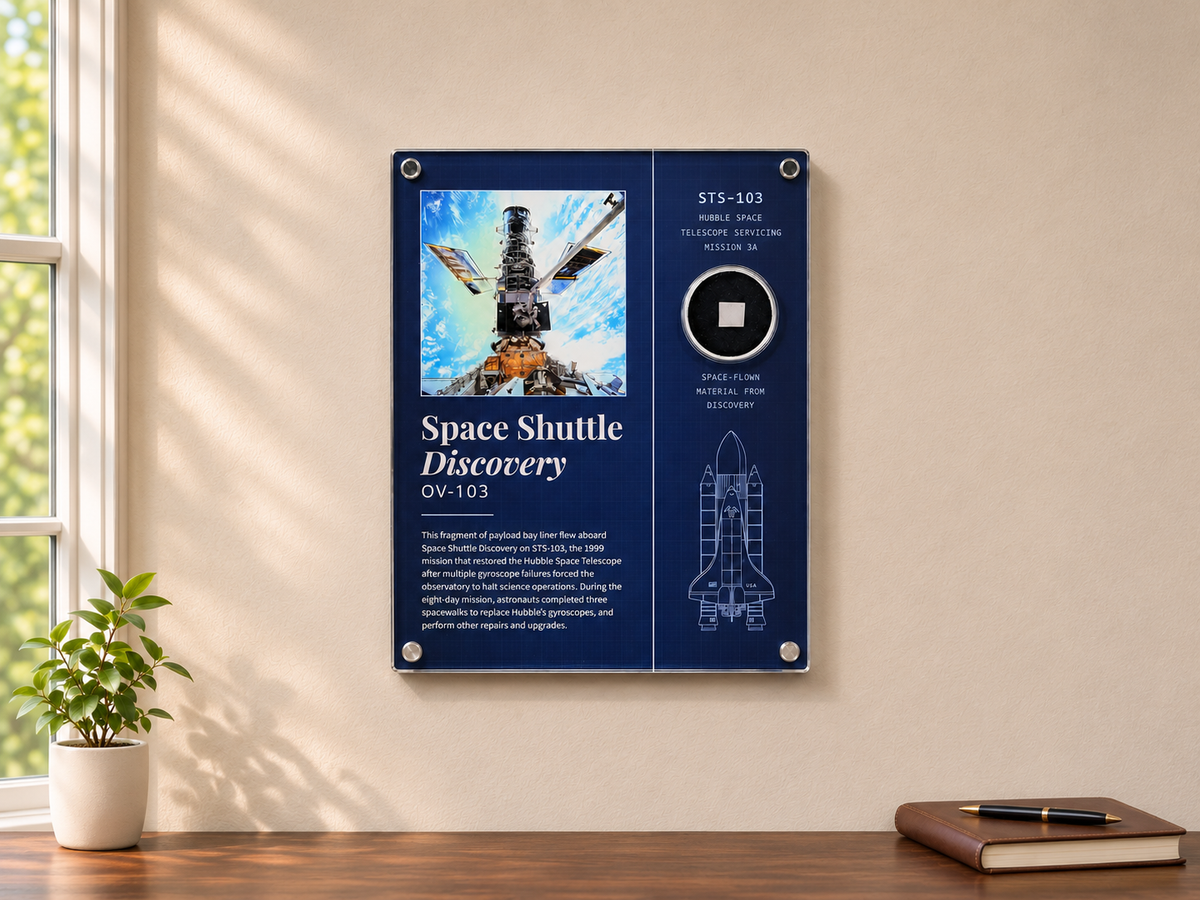
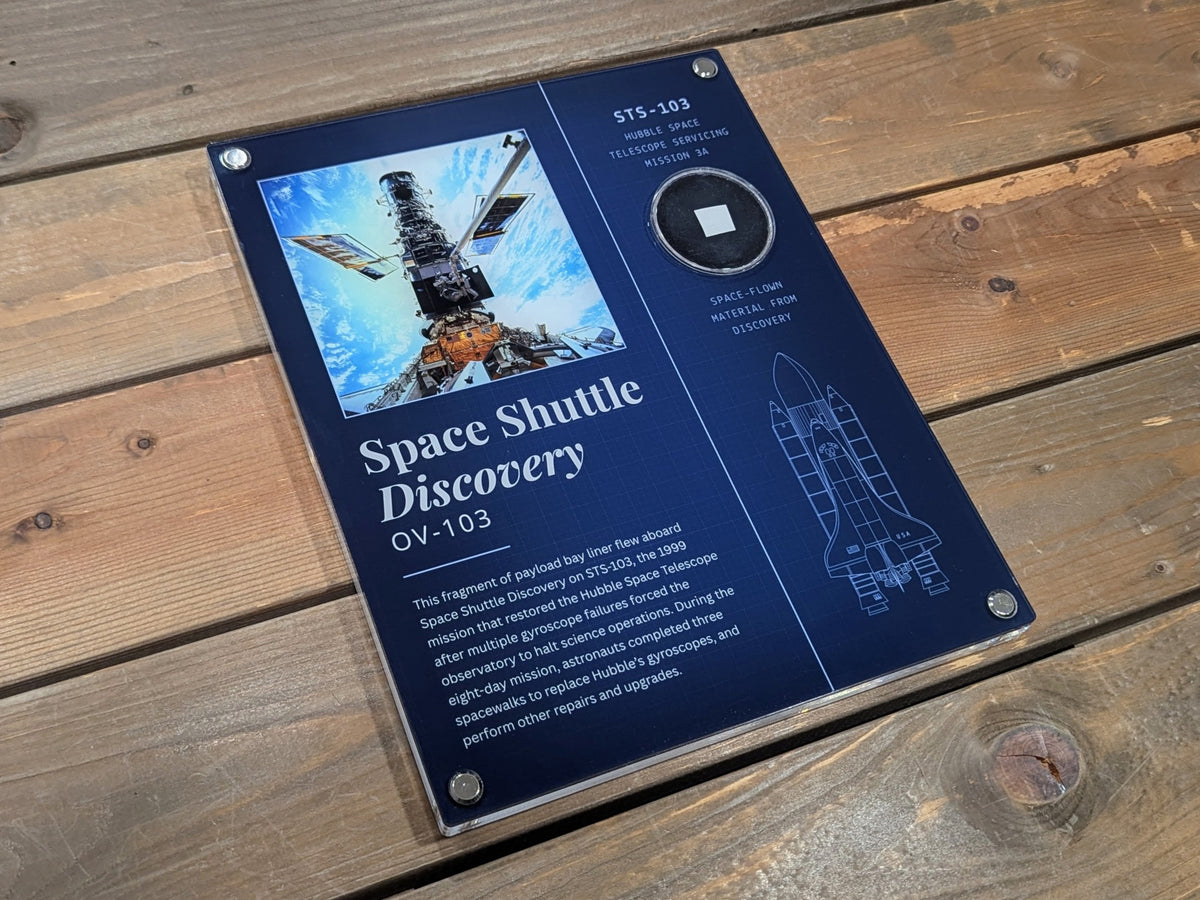
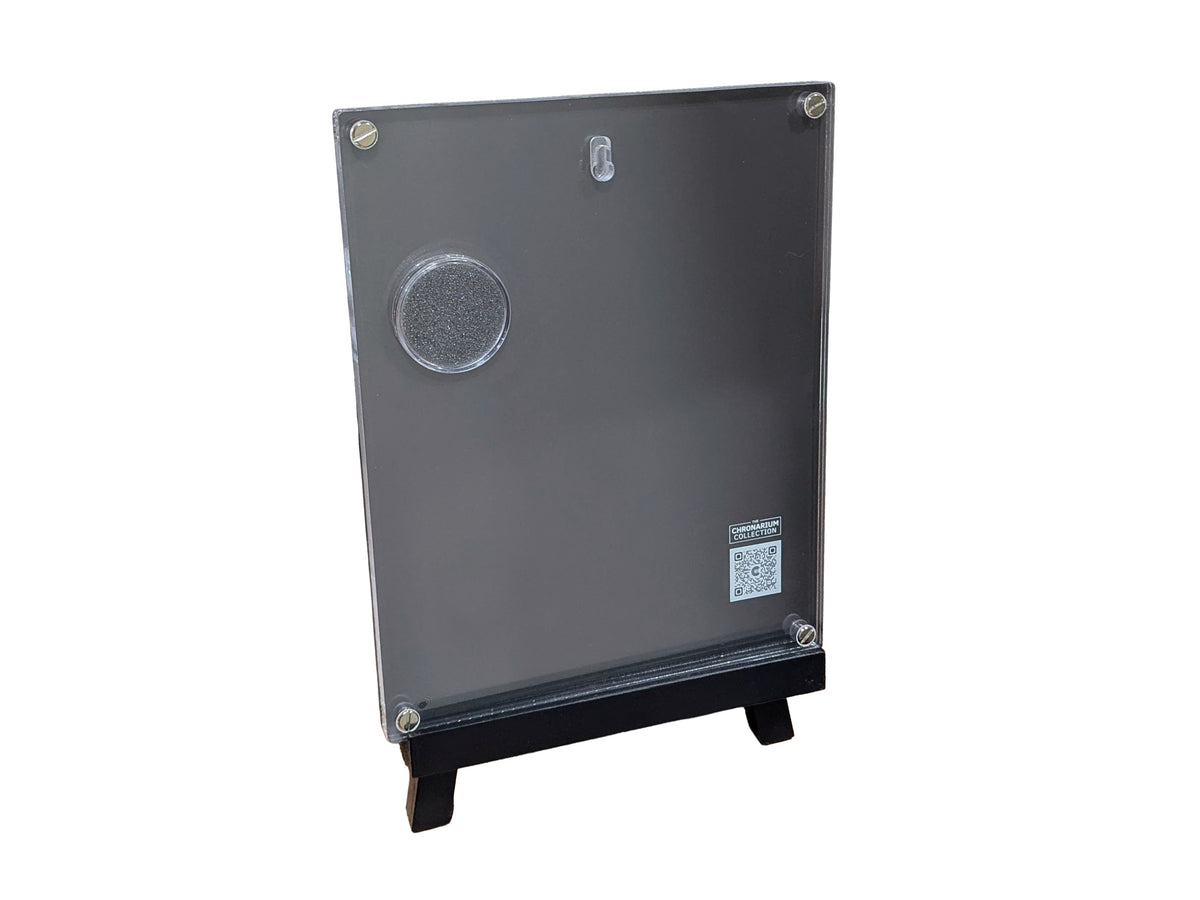

Original product photograph. See below for specimen examples.
THE FLOWN ARTIFACT
A small piece of Hubble’s orbital workshop.
On STS-103, Discovery’s payload bay carried the equipment for a mission that restored the Hubble Space Telescope's ability to observe the universe. This display contains a real piece of the bay liner that flew aboard the shuttle on that flight.
The liner is Beta cloth: a heat-resistant fabric used to cover insulation inside the payload bay and help maintain a clean environment around its cargo. It is a reminder that spaceflight depends on carefully chosen materials as much as on engines, computers and robotic arms.
What did the payload bay liner do?
The white lining visible inside a shuttle’s payload bay covered the underlying insulation. Its heat-resistant fabric helped protect that insulation and keep the cargo area clean.

Hubble above Earth after its release from Discovery at the conclusion of STS-103 in December 1999. Image: NASA.
DISCOVERY · STS-103 · DECEMBER 1999
A Christmas return to the stars.
By late 1999, failures in Hubble’s gyroscopes had made a servicing visit urgent. The telescope needed these instruments to hold a steady view of distant targets. Discovery launched on 19 December carrying seven astronauts and the tools to restore the observatory.
During three spacewalks, the crew replaced all six gyroscopes, installed a new onboard computer and a fine guidance sensor, and renewed key communications and data-storage equipment. The work demanded careful movements around an exceptionally valuable scientific instrument, with the shuttle’s payload bay serving as an orbital workshop.
Hubble was released on Christmas Day. Discovery landed on 27 December, ending an eight-day mission that returned the telescope to astronomical observing.
The payload bay liner specimen in this display flew aboard Discovery on STS-103. It offers a physical connection to the spacecraft that carried the team, tools and replacement hardware for one of Hubble’s most consequential service calls.
Launch: 19 December 1999
Landing: 27 December 1999
Crew: 7 · Spacewalks: 3
Mission: Hubble Servicing Mission 3A

Each display contains one authentic specimen.
A CLOSER LOOK AT YOUR SPECIMEN
One small specimen. A remarkable journey.
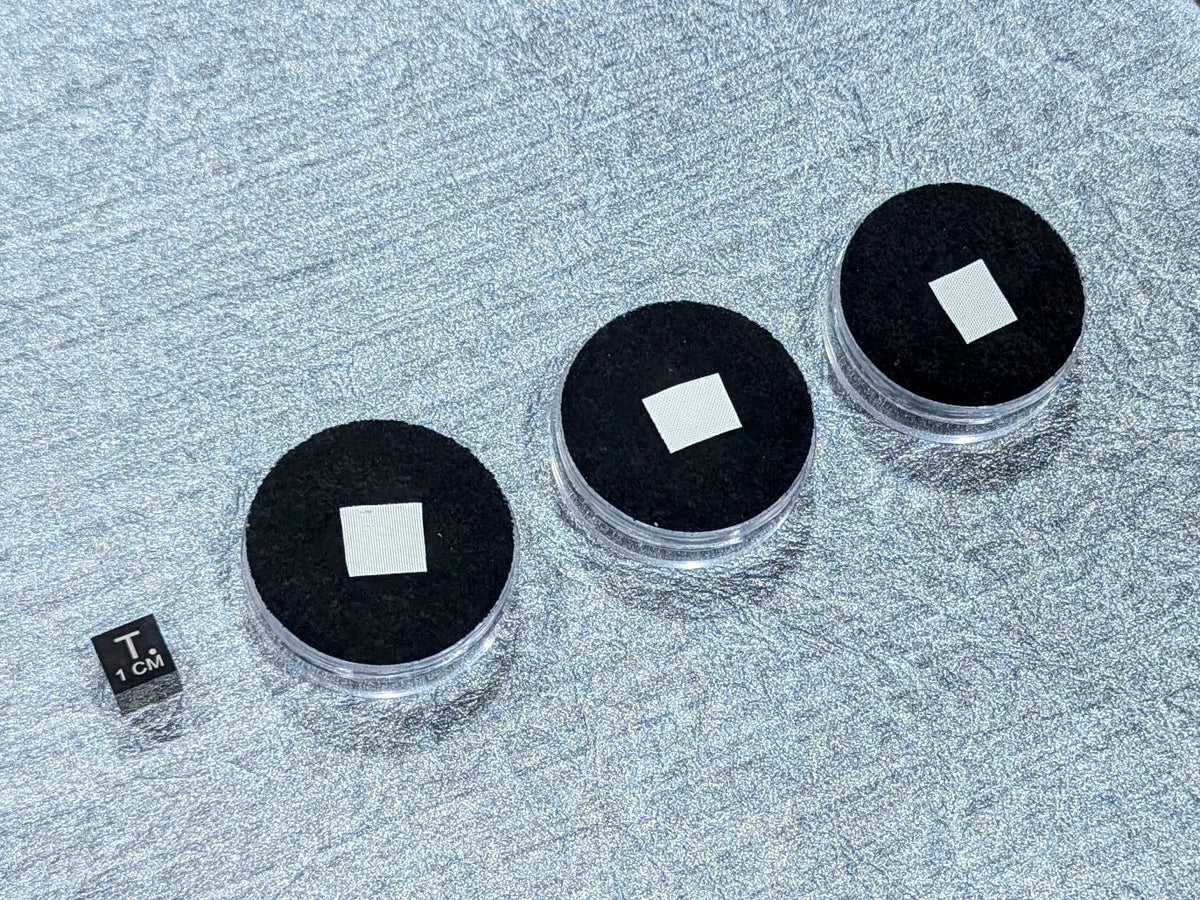
These are examples of the payload bay liner specimens offered in this display. Each is about 1cm in size. You will receive one specimen, selected from our limited supply. It may be one of the examples pictured or another piece.
The removable jar lets you examine your specimen more closely while keeping it contained. The acrylic display and accompanying certificate identify its spacecraft and mission.

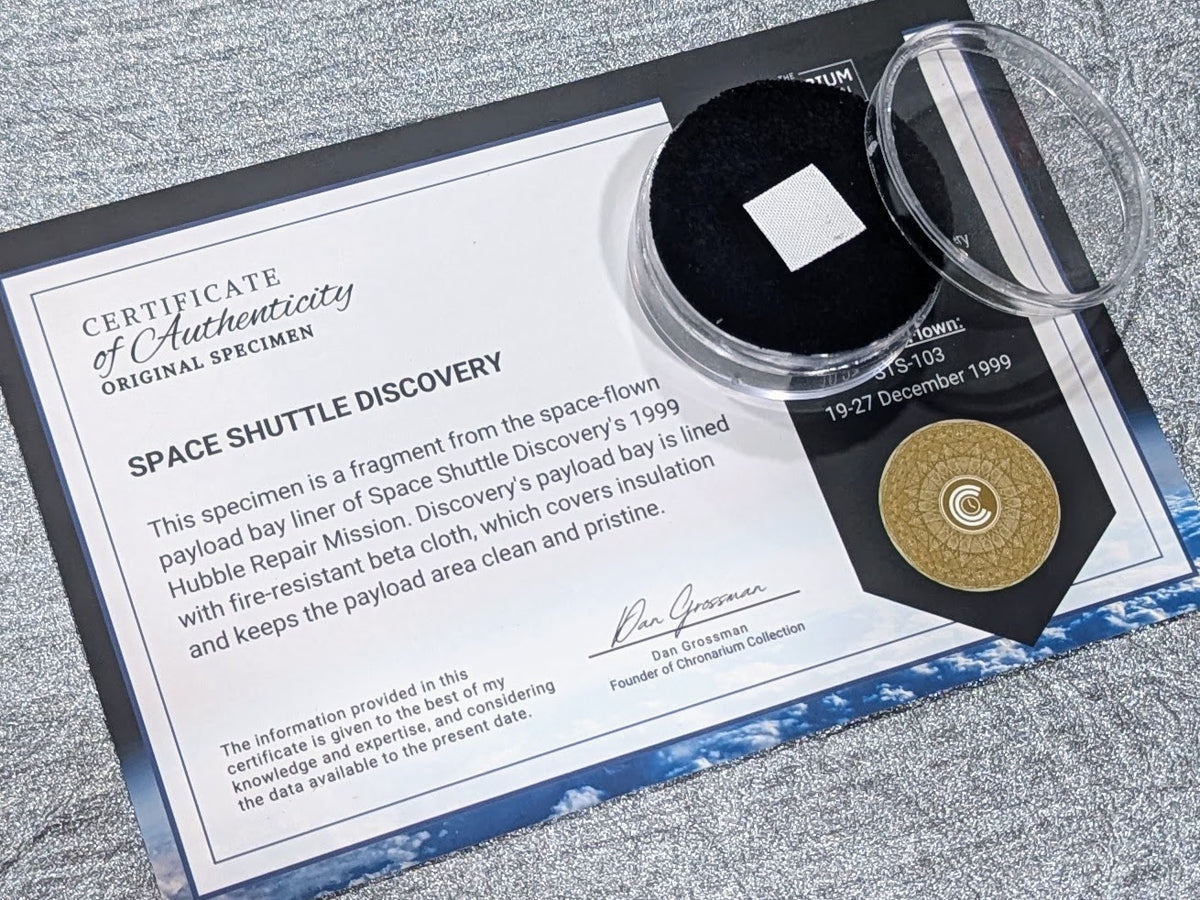
The Chronarium Collection Certificate of Authenticity supplied with the Discovery display. Select the image to read it in detail.
AUTHENTICITY & PROVENANCE
History you can examine.
Every display includes a Certificate of Authenticity issued by Chronarium Collection, identifying the specimen as a payload bay liner specimen flown aboard Discovery on STS-103.
The source artifact was acquired through a specialist space memorabilia auction whose authenticity commitment is supported by provenance, research and documented history. We retain that acquisition context as part of the artifact’s story.
Understanding the documentation
Your Chronarium Collection certificate identifies the specimen and its STS-103 flight history. The historical mission photographs and NASA account explain the flight; they do not constitute NASA certification or endorsement of this commercial product.

The display measures 8x10".
A PLACE IN YOUR COLLECTION
Spaceflight history, beautifully presented.
Give the artifact room to tell its story. The portrait acrylic display pairs mission artwork and information with a removable specimen jar, creating a compact exhibit for a home office, study or collection. At approximately 15 mm thick, the display can be shown on a table or shelf, or hung on a wall from the keyhole on the back. It makes a thoughtful addition to a collection built around the shuttle program, human spaceflight or the engineering that made those missions possible.
Displaying and caring for your specimen
Keep the specimen inside its jar while examining it. Handle the acrylic with care and use a clean, soft cloth to remove surface dust. Avoid abrasive cleaners and unnecessary handling of the artifact itself.