


FLOWN SPACECRAFT ARTIFACT · STS-77
Space Shuttle Endeavour
Space Shuttle Endeavour
Own a real thermal protection tile fragment flown aboard Endeavour on STS-77. A very limited piece of spaceflight history, presented in an 8 × 10-inch acrylic display.
YOUR SPACEFLIGHT EXHIBIT
- Space-flown specimen
- 8x10" Acrylic Display
- Removable specimen jar
- Certificate of Authenticity
Couldn't load pickup availability
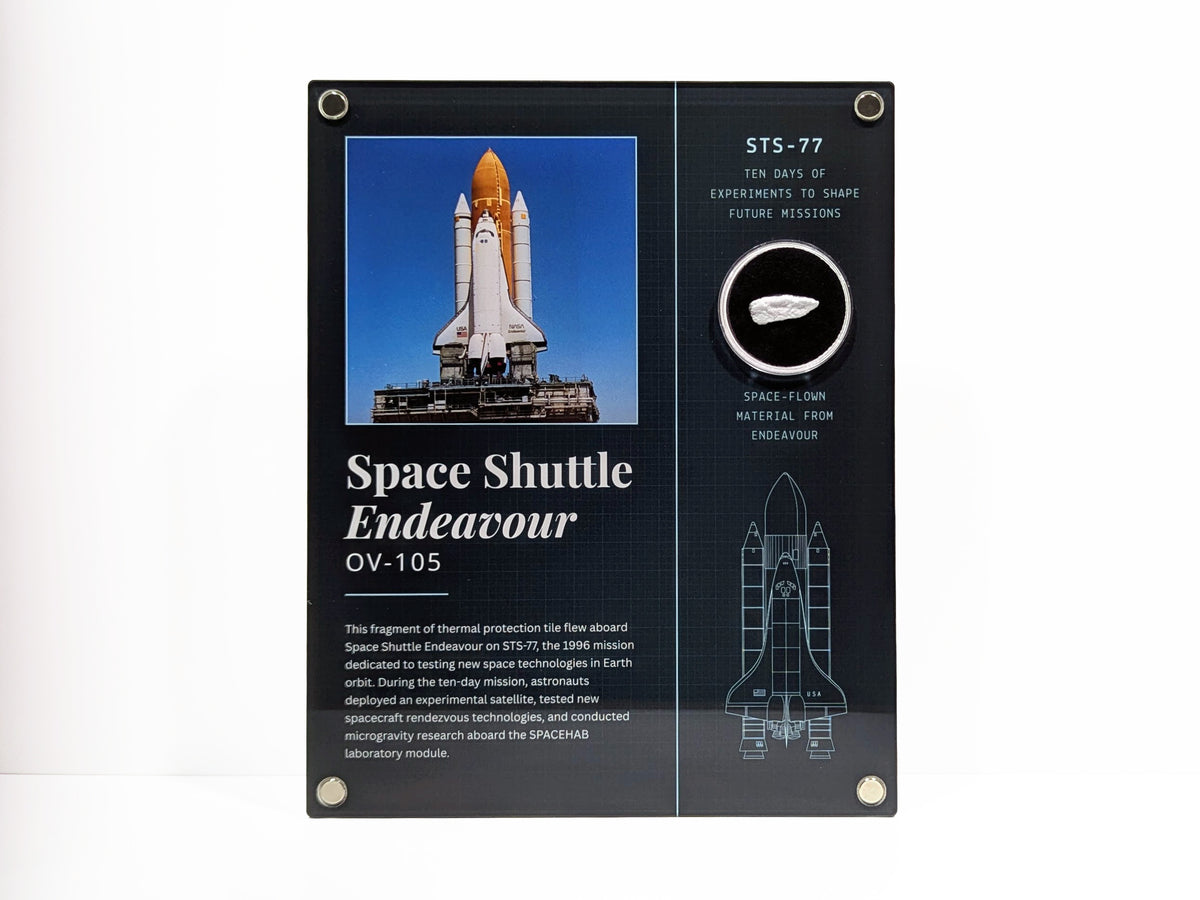
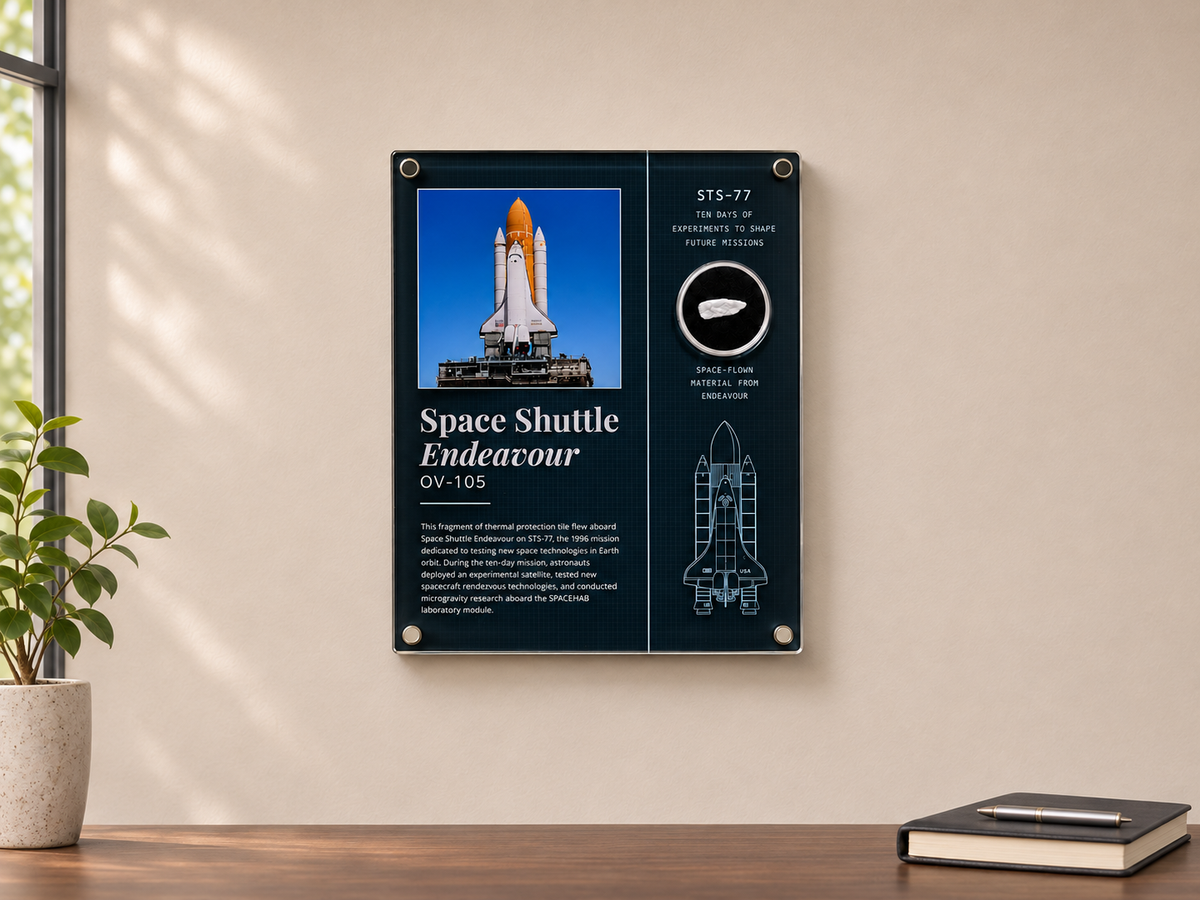
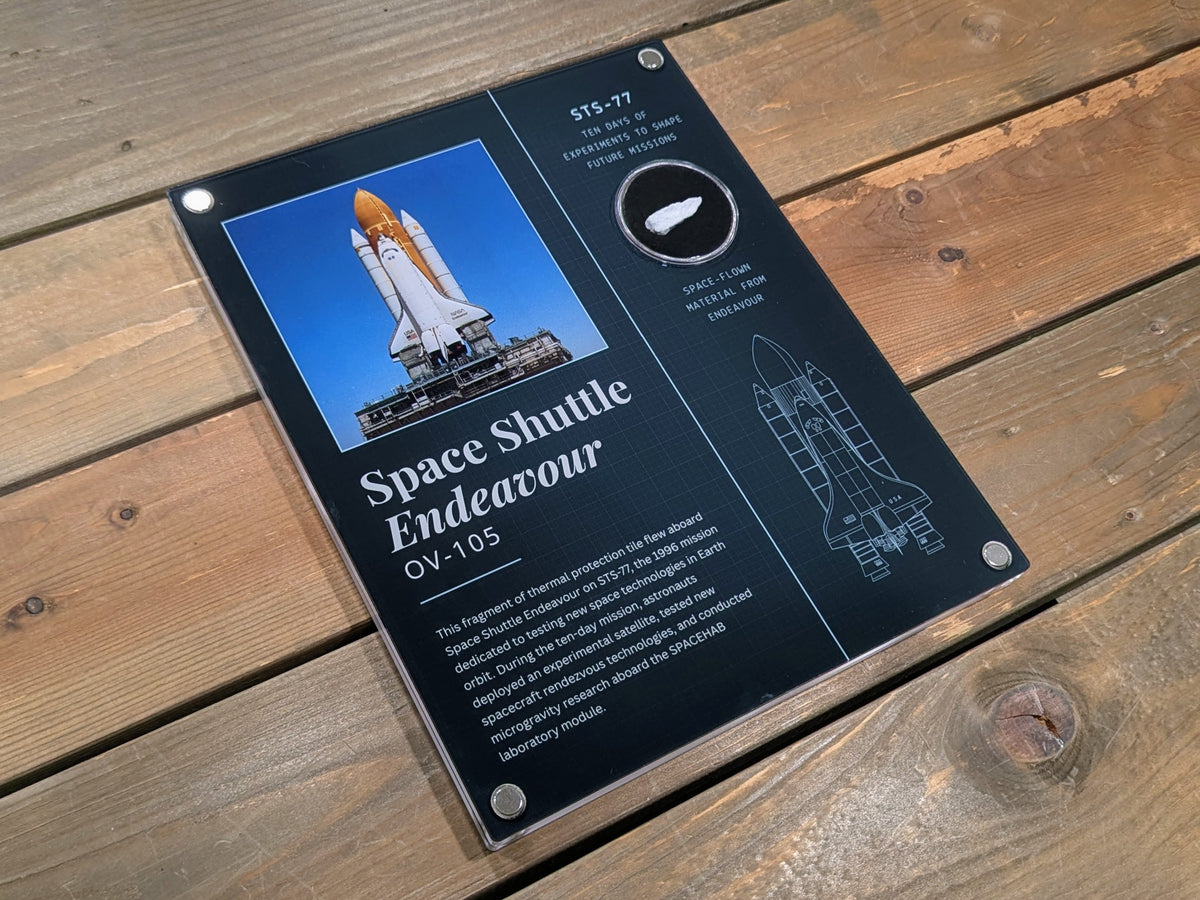
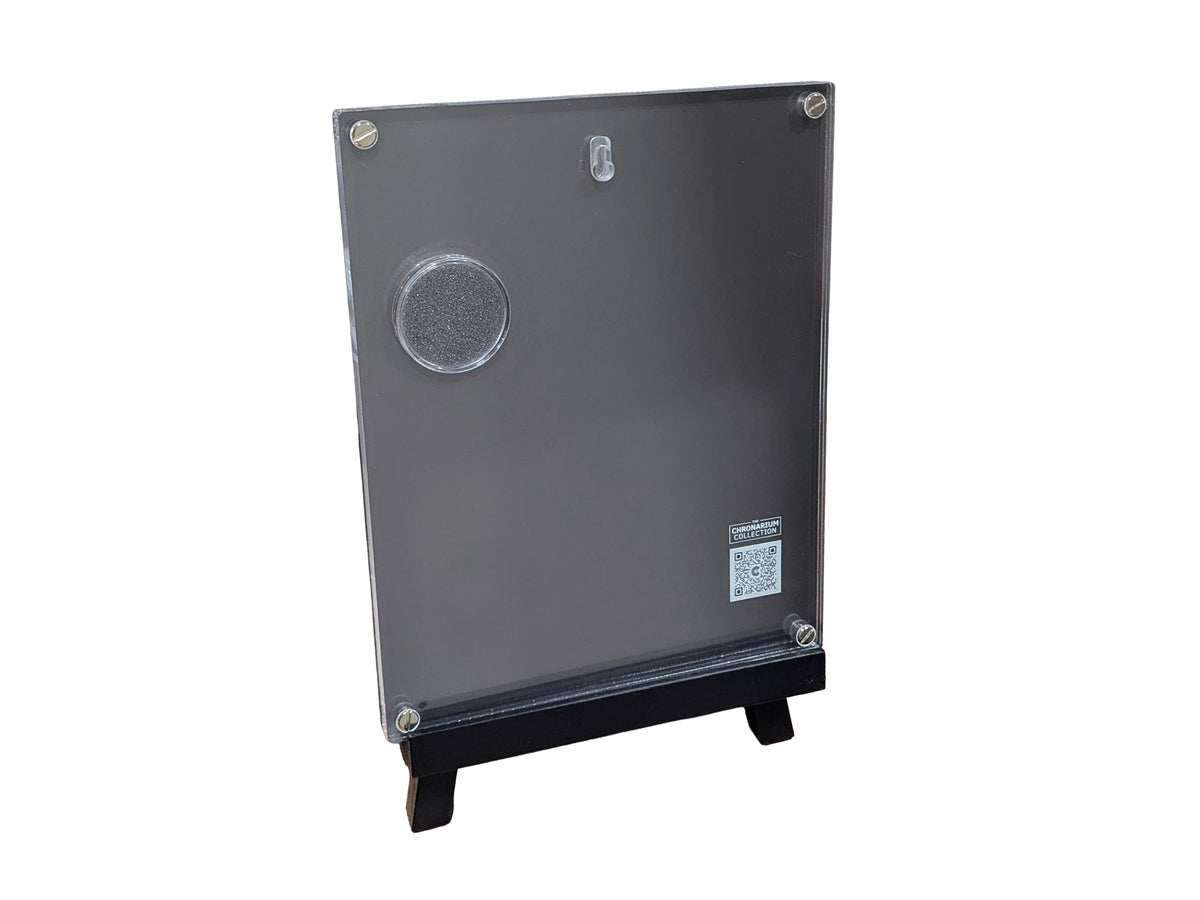
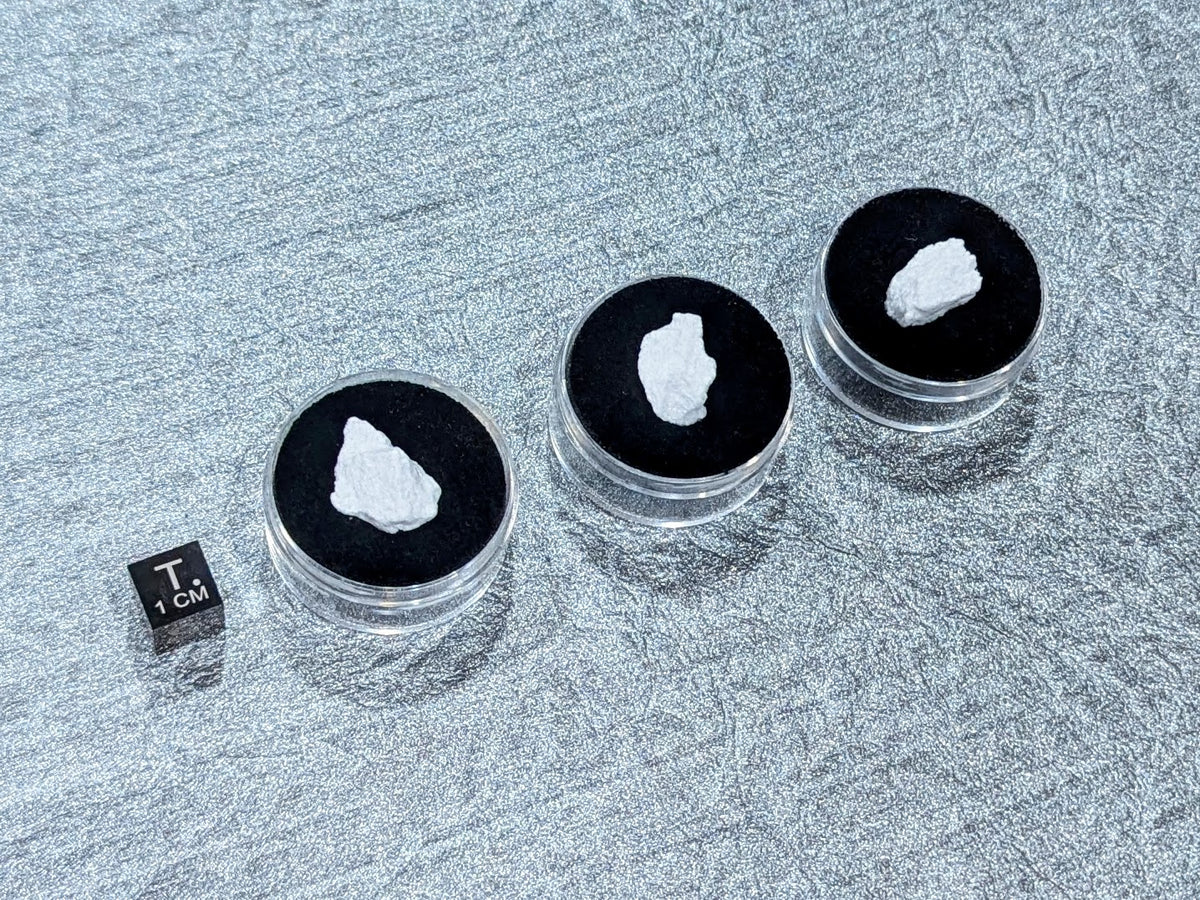

Original product photograph. See examples of the available specimens below.
THE FLOWN ARTIFACT
A fragment of the shield that brought Endeavour home.
This tile fragment formed part of the orbiter’s thermal protection system, located on one of Endeavour's Orbital Maneuvering System Pods. Its job was to help insulate the structure beneath it as the spacecraft moved between the extremes of orbit and atmospheric flight.
What is an LRSI tile?
LRSI stands for low-temperature reusable surface insulation. Shuttle thermal protection used different materials for different thermal environments. LRSI tiles served areas subject to less intense heating than the orbiter’s hottest surfaces. This listing is for a small fragment of a flown tile, presented with its mission story and certificate.

Spartan 207 and the Inflatable Antenna Experiment above Earth, photographed during STS-77 on 20 May 1996. Image: NASA, S77-E-5027.
ENDEAVOUR · STS-77 · MAY 1996
Ten days of discovery above Earth.
On 19 May 1996, Endeavour lifted off with six astronauts and a busy program of experiments. Across 161 orbits, STS-77 turned the shuttle into both a research laboratory and a test platform for technologies intended for future spacecraft.
Inside the SPACEHAB module, the crew investigated how materials and biological systems behave in microgravity. Outside, they deployed the Spartan 207 satellite and its Inflatable Antenna Experiment: a structure roughly 50 feet across that explored a lightweight approach to building large antennas in space.
The mission also tested how a small satellite could stabilize itself without conventional powered control, and used repeated rendezvous operations to observe the results. Endeavour returned to Kennedy Space Center on 29 May after ten days in orbit.
This display connects that flight to something tangible: a surviving fragment of the thermal protection system carried by Endeavour. A small material detail becomes an invitation to explore the engineering behind a reusable spacecraft.
Launch: 19 May 1996
Landing: 29 May 1996
Crew: 6 · Earth orbits: 161
Focus: SPACEHAB research and technology demonstrations

Three example specimens are shown. Display includes one specimen.
A CLOSER LOOK AT YOUR SPECIMEN
One small specimen. A remarkable journey.
The photograph shows examples of the tile fragments available for this display. You will receive one specimen, selected from our limited supply. It may be one of the examples pictured or another piece.
Included: one authentic thermal protection file fragment, one acrylic display, certificate of authenticity.

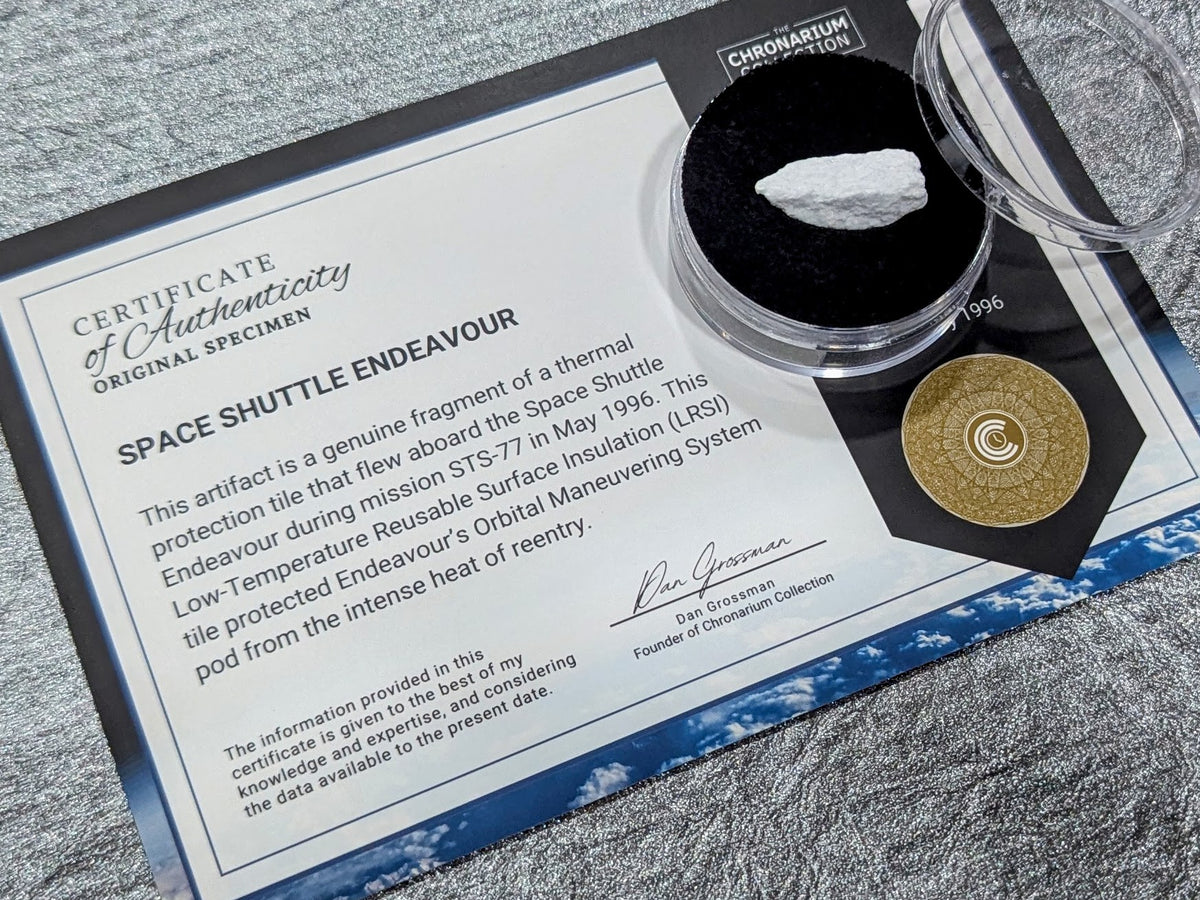
The Chronarium Collection Certificate of Authenticity supplied with the Endeavour display. Select the image to read it in detail.
AUTHENTICITY & PROVENANCE
History you can examine.
Every display includes a Certificate of Authenticity issued by Chronarium Collection, identifying the specimen as a thermal protection tile fragment flown aboard Endeavour on STS-77.
The source artifact was acquired through a specialist space memorabilia auction whose authenticity commitment is supported by provenance, research and documented history. We retain that acquisition context as part of the artifact’s story.
Understanding the documentation
The Chronarium Collection certificate identifies the specimen supplied with your display. Historical records and acquisition information support the attribution of the source artifact. NASA photographs and mission accounts provide historical context; they are not an endorsement or certification of this commercial product.
Photographs of supporting records are provided for reference. Original historical paperwork is not included with the display.
Records from the source artifact
Inspection and disposition records provide context for the parent tile. These 1997 records concern tile condition and removal; the STS-77 flight attribution is recorded in the acquisition history and Chronarium Collection certificate.


8x10" acrylic display
A PLACE IN YOUR COLLECTION
Spaceflight history, beautifully presented.
The portrait acrylic display pairs mission artwork and information with a removable specimen jar, creating a compact exhibit for a home office, study or collection. At approximately 15 mm thick, the display can be shown on a table or shelf, or hung on a wall from the keyhole on the back. It makes a thoughtful addition to a collection built around the shuttle program, human spaceflight or the engineering that made those missions possible.
Displaying and caring for your specimen
Keep the specimen inside its jar while examining it. Handle the acrylic with care and use a clean, soft cloth to remove surface dust. Avoid abrasive cleaners and unnecessary handling of the artifact itself.